
Concerned about a root canal? Today’s treatments have high success rates and can help save your natural tooth for years to come.

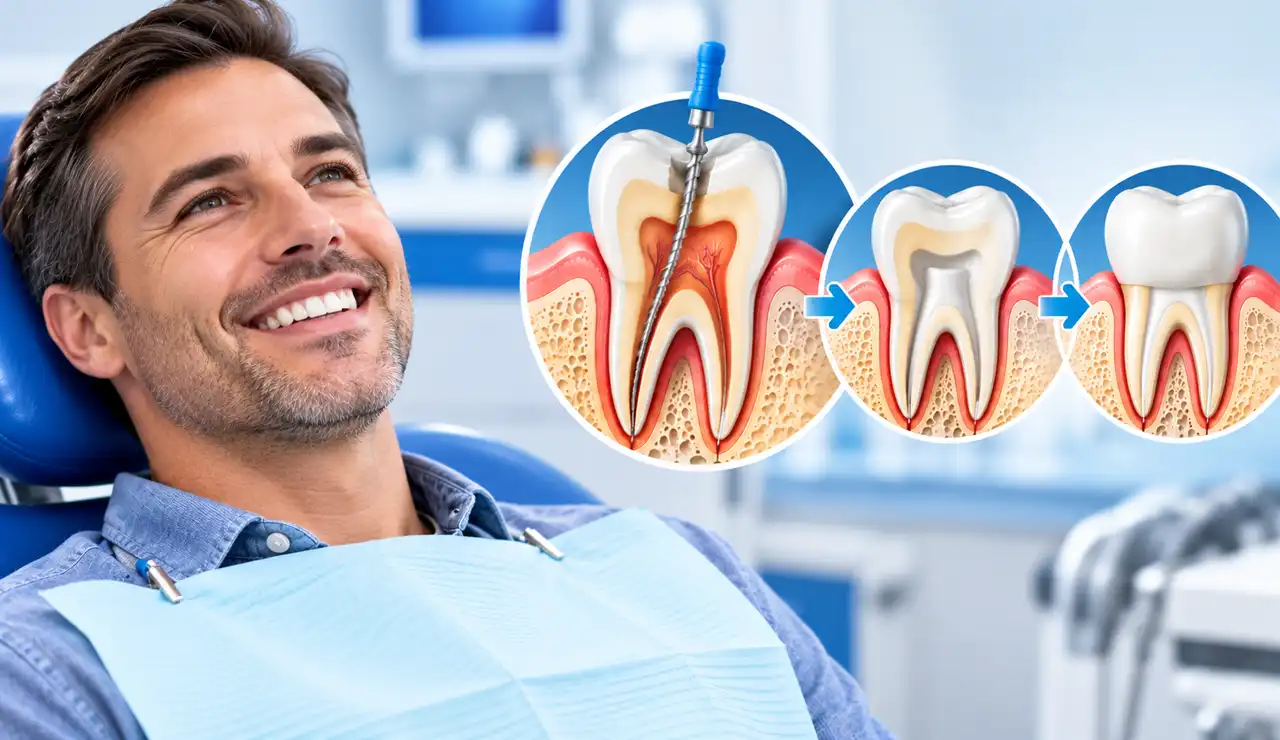
If you have been told you need a root canal, your first reaction might be a mix of anxiety and hesitation. It is completely normal to wonder: Will this actually work? Is it worth saving my natural tooth?
When evaluating root canal success rates, the scientific data offers reassuring news. Modern endodontic treatment is among the most predictable and effective procedures in dentistry. Studies consistently show that initial root canal treatments carry an overall success rate between 86% and 95%, with long-term tooth survival rates reaching up to 97% over a decade.
At Woden Dental Care, we believe in empowering our patients through transparent, evidence-based information. Here is a clear, jargon-free look at what the numbers mean for your smile and what key factors help ensure your treatment lasts a lifetime.
Root canal treatment is a proven way to save your natural tooth, with high long-term success rates. Learn what factors help ensure lasting results and a healthier smile.
Woden Dental Care
The Numbers Explained: Success Rate vs. Tooth Survival Rate
When clinical researchers evaluate root canals, they look at two primary measurements:
- Clinical Success Rate (86%–95%): This means the infection is fully eradicated, the surrounding bone tissue has healed, and the patient is entirely pain-free.
- Tooth Survival Rate (93%–97%): This measures whether your natural tooth remains functional, stable, and comfortably in place ten or more years after the procedure.
In plain English: a root canal gives your natural tooth an exceptionally high chance of staying right where it belongs—working comfortably for decades.
What Factors Impact Root Canal Success Rates?
While the baseline statistics are remarkably high, individual outcomes depend on several clinical and lifestyle factors:
- The Quality of the Final Restoration (The Crown)
A root canal cleans and seals the inside of the tooth, but the restoration on top protects it. Research highlights that teeth protected with a custom dental crown after endodontic therapy are up to six times more likely to survive long-term than those left unrestored. The crown prevents bacteria from re-entering and shields fragile tooth structure from cracking under heavy chewing forces.
- Tooth Location and Anatomy
Front teeth (incisors and canines) typically feature single, straight roots, making them straightforward to clean and seal. Back molars have multiple, often curved root canals. While molars have a slightly more complex anatomical structure, high-precision tools make treating them highly effective.
- Early Intervention
Seeking treatment as soon as you experience sensitivity or discomfort significantly raises your success odds. Treating the tooth before deep bacterial infection reaches the surrounding jawbone yields the most predictable healing response.
- Modern Technology and Precision
Dentistry has advanced significantly. The use of digital 3D imaging, electronic apex locators, and rotary endodontic instruments allows dentists to locate, disinfect, and seal every micro-canal with extreme accuracy.
Root Canal vs. Tooth Extraction: What Data Prefers
Patients often ask whether extracting a troubled tooth and replacing it with an implant or bridge is a better choice.
While modern dental implants are a fantastic option for missing teeth, keeping your natural tooth should always be the first priority when medically feasible.
- Natural Feel: No artificial replacement matches the exact fit, feel, and chewing force of your original tooth structure.
- Cost-Effective: A root canal paired with a protective crown is generally far less invasive and less costly than extracting a tooth and undergoing implant surgery.
- Shorter Treatment Timeline: Root canal therapy can typically be completed in one to two visits, whereas extraction and implant placement often require several months of healing.
Experience Stress-Free Dental Care at Woden Dental Care
Understanding the data behind root canal success rates can give you total peace of mind when making decisions about your oral health. A root canal isn’t something to fear—it is a proven, reliable routine procedure designed to relieve pain and protect your natural smile.
At Woden Dental Care, our compassionate team prioritizes your comfort at every step, utilizing gentle techniques and modern technology to deliver exceptional care.
Frequently Asked Questions
Q1. What is the success rate of root canal treatment?
A: The overall clinical success rate for primary root canal therapy ranges between 86% and 95%. When properly restored with a permanent crown, long-term tooth survival rates reach 93% to 97% over ten years.
Q2. How long can a root canal-treated tooth last?
A: With proper oral hygiene, routine dental checkups, and a quality crown, a root canal-treated tooth can last 10 to 20 years or even a lifetime.
Q3. Does getting a root canal hurt?
A: No. Modern root canal treatment is performed under effective local anesthesia, making the procedure virtually painless and similar to getting a standard filling.
Q4. Do I always need a crown after a root canal?
A: While some front teeth with minimal damage may only require a filling, back teeth (molars and premolars) almost always need a crown to prevent fractures from heavy chewing pressure.
Q5. Can a root canal fail years later?
A: Although rare, a root canal can fail years later due to new tooth decay, a cracked crown, or hidden canal anatomy. Most failed cases can be successfully saved through endodontic retreatment.
Q6. Is it better to get a root canal or extract the tooth?
A: Saving your natural tooth with a root canal is almost always the better option. It is less invasive, preserves your natural bite alignment, and avoids more extensive replacement procedures.
Tags:#Dentist#RootCanal